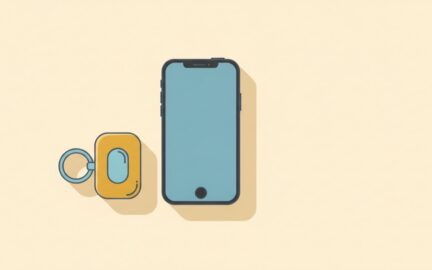
Explained
Hardware Wallet or Software Wallet: Which Do You Need?
In plain English Hardware is meaningfully safer for larger amounts, because the keys never touch an internet-connected machine.

Prices update about once a minute and come from public market data, proxied by us. They are for information, not a recommendation to buy or sell anything.
Past prices tell you what already happened. They are not a forecast, and crypto has no obligation to repeat itself.
The Graph solves an unglamorous but real problem: blockchain data is very hard to search.
A blockchain is a sequential list of transactions. It is excellent at proving what happened and terrible at answering a question like "show me everything this wallet did with this application last month". Answering that directly means reading through enormous amounts of raw data.
The Graph indexes blockchain data so applications can query it quickly, in much the way a search engine indexes the web so you do not have to read every page. Applications pay for those queries, and the people who run the indexing infrastructure earn GRT for providing it.
A simple way to picture it
The index at the back of a book. The book already contains everything; the index is what makes it possible to find one fact without reading cover to cover.
No. This is infrastructure sold to developers, and its value depends on how many applications pay for indexing — something a beginner has no practical way to assess.
Crypto left on an exchange is held by that exchange, not by you. For anything you would mind losing, move it to a wallet whose keys you control, and write the recovery phrase on paper — never in a photo, a notes app or an email. No exchange, wallet, support agent or website, including this one, will ever need your seed phrase. Anyone who asks for it is stealing from you.
In plain English Hardware is meaningfully safer for larger amounts, because the keys never touch an internet-connected machine.
In plain English It is normal and expected on any regulated platform. Refusing to provide it usually means being unable to withdraw.
A physical device for holding your keys offline — worth it once your holdings grow. Here is how setup actually works.
In plain English You need somewhere to hold crypto once you own any, and which kind of wallet you choose decides whether an exchange holds the keys for you, or only you do. …
They can, but it is slow and expensive for anything beyond a simple lookup. Blockchains are built to prove history, not to answer complex questions about it quickly.
Paying for queries and rewarding the people who run indexing services. It is a payment and incentive token for the network's own economy.
It started with Ethereum and has extended to other networks. Coverage varies, and which chains are supported changes over time.
Converted at the live rate shown above. Exchanges add their own fees and spread, so what you actually pay will differ.