What Is a Rug Pull?
A project takes the money and disappears. How it works mechanically, and the signals that show up beforehand.
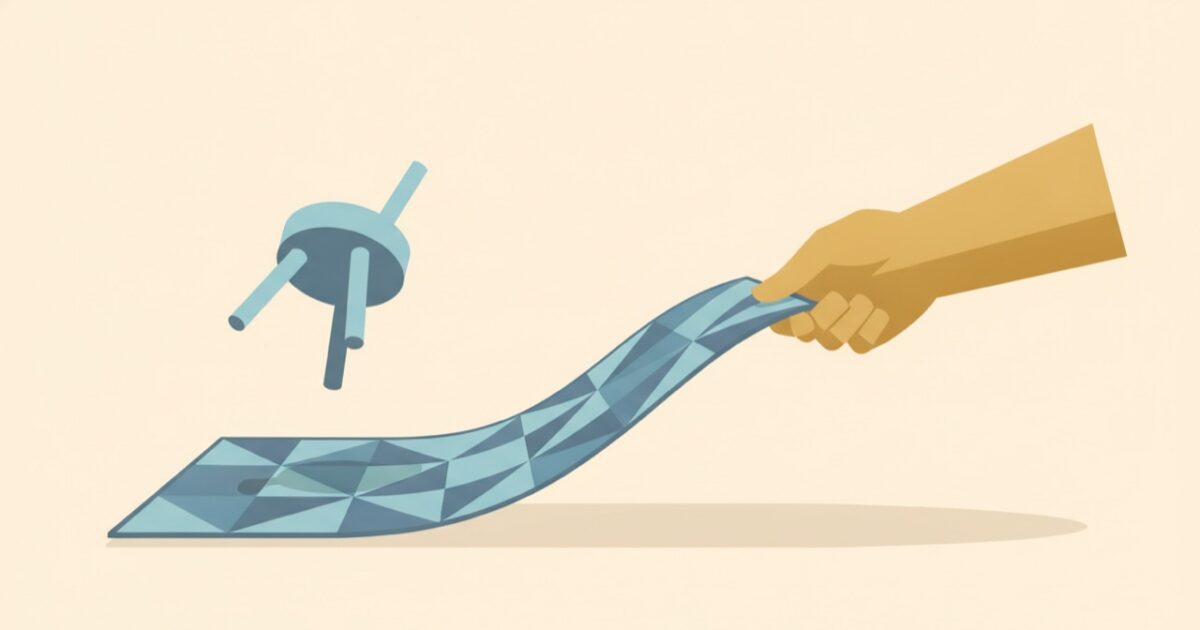
A rug pull is exactly what it sounds like: the ground is removed from under the people who put money in. A project launches, attracts buyers, and then the people running it take the funds and vanish.
How it works mechanically
For a new token to be tradeable, someone has to supply a pool of it alongside something valuable — usually a well-known cryptocurrency — so that buyers have something to trade against. The people who create the token normally supply that pool.
They can also remove it. When they do, there is nothing left to sell the token into. The price collapses to effectively nothing, and holders are left with something no one can buy from them.
A slower variant: the creators keep a very large share of the token, promote it heavily, and sell steadily into the buying interest they generate. There is no dramatic moment, just a price that never recovers.
A third variant is written into the token itself — code that prevents anyone but the creators from selling, discovered only when a holder tries.
Signals worth noticing
Anonymous teams with no verifiable history. Not proof of anything on its own, but it removes any consequence for walking away.
Enormous promised returns, particularly guaranteed ones. Nothing in this market can guarantee a return, and a promise of one is a statement about the promiser rather than the investment.
Heavy promotion in comments, replies and direct messages, especially with urgency attached. Manufactured attention is cheap to buy and is the main input to this kind of scheme.
A token where most of the supply sits in a handful of wallets. It means a small number of people can end the price at any time.
No product beyond a website and a roadmap. A convincing site takes an afternoon.
The honest position
Very new, very small tokens are where nearly all of this happens. The most effective protection available to a beginner is simply not to buy them — not because every one is fraudulent, but because distinguishing the few that are not requires skills that take years to develop, and the cost of guessing wrong is everything you put in.
If someone is urging you towards a token you had not heard of an hour ago, that urgency is the product being sold.
Delia Frankowski
Guides and first steps
Writes the step-by-step guides: your first wallet, your first buy, what the fees are actually for, and how to check you have done it right.
A standing byline of the Bright Start News desk, not an individual journalist. Everything published under it is written and edited by the desk, which is accountable for it.
All articles by Delia Frankowski → How we work → Corrections →
Keep reading
Hardware Wallet or Software Wallet: Which Do You Need?
The practical difference between a wallet app and a physical device, and how to decide which is right for what you hold.
What Does “Decentralised” Actually Mean?
The word is on every crypto homepage. Here is what it means, and how to tell when it is being used loosely.

Why Does Crypto Move So Much?
Crypto prices swing far harder than shares or savings. Here is what actually drives that, and what it means if you hold…